
Board Certified Tampa
DUI Defense Expert
DUI Defense Expert



A felony DUI charge is one of the most serious criminal cases prosecuted in Florida. Unlike a misdemeanor DUI, a felony conviction can expose you to state prison, lengthy driver’s license consequences, substantial fines, probation, and a permanent felony record that may affect your employment, professional licensing, firearm rights, and future opportunities.
I have spent decades defending individuals charged with DUI offenses throughout the Tampa Bay area. As a former Florida prosecutor and a Florida Bar Board Certified Criminal Trial Lawyer, I understand how prosecutors investigate and prepare felony DUI cases, and I use that experience to help my clients build the strongest defense possible.
Every felony DUI case is different. Before I offer legal advice, I review the available evidence, discuss your objectives, and explain both the strengths and weaknesses of the prosecution’s case. If there is an issue that I cannot answer with complete confidence, I will tell you that I do not know rather than speculate.
Here you can learn more about my background and trial experience.

If you or a family member has been arrested for felony DUI, contact my office as soon as possible.
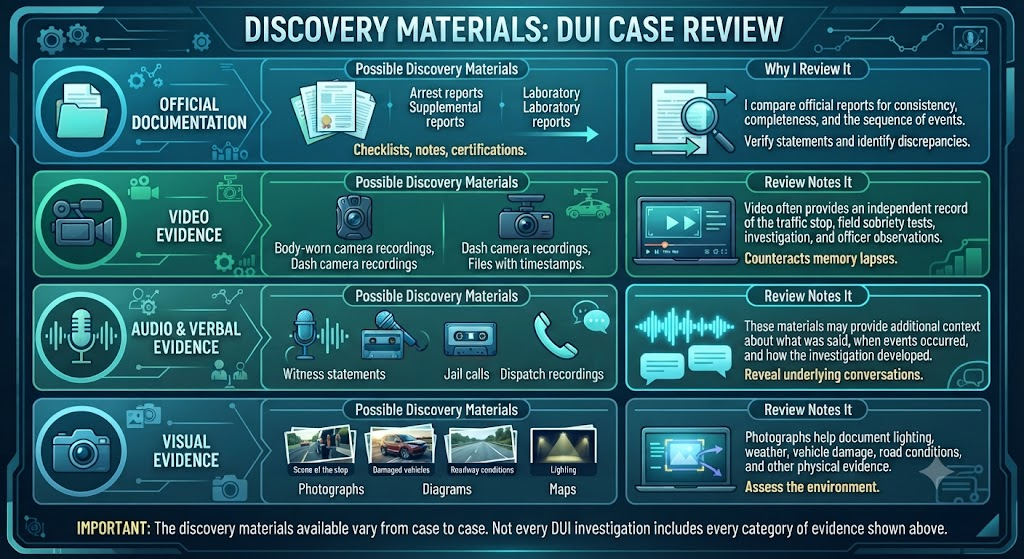
Waiting to hire counsel in a felony DUI case can cost you critical evidence—surveillance video gets overwritten, witnesses disappear, and memories fade. As soon as I take your case, I request and audit the full discovery file: arrest and supplemental reports, body-worn and dash camera video, dispatch logs, witness statements, and certified prior court records.
My approach starts with a single rule: never assume the prosecution’s version of events is accurate. I compare every officer’s written report against the video and physical evidence to spot inconsistencies, unlawful traffic stops, or procedural errors that can support a motion to suppress or reduce a felony charge.
Most DUI arrests in Florida begin as misdemeanor offenses. However, under certain circumstances, a DUI may be charged as a felony. In general, felony DUI charges may arise when allegations involve repeat offenses, serious bodily injury, or other aggravating circumstances recognized under Florida law.
Because felony classifications depend upon the specific facts of the case, your criminal history, and the applicable statutes, I review each client’s record carefully before discussing how the prosecution may classify the offense. A felony DUI prosecution is fundamentally different from a routine misdemeanor DUI. The investigation is often more extensive, the evidence more complex, and the potential penalties significantly greater.
Several different circumstances may result in felony DUI allegations.
These may include cases involving:
Under Florida DUI law, prosecutors elevate repeat DUI offenses to felony charges based on two specific statutory triggers:
Because a felony DUI conviction also creates a permanent felony record and triggers Florida’s Criminal Punishment Code (CPC) scoresheet, prior record points and potential habitual offender enhancements can dramatically increase prison exposure before plea negotiations even begin. Before advising you on sentencing exposure, I audit certified court records for every alleged prior—including out-of-state convictions—to verify whether each prior is legally valid, properly proven, and falls within the statutory lookback window.
Some felony DUI cases involve additional allegations that increase the complexity of the prosecution.
DUI cases involving a fatality are prosecuted as DUI Manslaughter (a second-degree felony, or first-degree felony if failure to render aid/leaving the scene is alleged) under Fla. Stat. § 316.193(3)(c)3., carrying mandatory minimum prison exposure and complex accident-reconstruction issues. For dedicated defense strategies on fatal crash cases, visit our Tampa DUI Manslaughter Lawyer page.
Felony DUI cases in Tampa and Hillsborough County are prosecuted in the 13th Judicial Circuit Court at the George E. Edgecomb Courthouse (800 E. Twiggs St., Tampa), following booking and bond processing at the Orient Road Jail or Falkenburg Road Jail. Navigating felony arraignments, pretrial release conditions, suppression hearings, and jury trials in Hillsborough County requires early preparation—schedule a confidential consultation as soon as possible so we can begin reviewing your prior record and discovery file.
Many people hear the words “driving under the influence” and think of a traffic citation. A felony DUI is a criminal prosecution with potentially life-changing consequences. A conviction may affect:
Every client faces different concerns, which is why I tailor my representation to each individual’s circumstances.
Felony DUI prosecutions rely heavily on breath, blood, or urine testing, but scientific evidence is only as reliable as the procedures behind it. I examine how samples were collected, chain-of-custody records, instrument maintenance logs, and laboratory protocols—alongside whether law enforcement had reasonable suspicion for the stop, probable cause for the arrest, and a valid legal basis for any blood draw or search warrant. If constitutional violations or testing errors occurred, we challenge the admissibility of that evidence in court.
Felony DUI prosecutions are often treated as significant public safety cases.
Because of the potential consequences, prosecutors frequently devote substantial investigative and prosecutorial resources to these matters.
That makes early preparation essential.
My responsibility is to carefully review the evidence, identify legal issues, consult experts when appropriate, and prepare a defense based upon the facts—not assumptions.
Depending upon your circumstances, you may also find these resources helpful:
These related topics provide additional information that may help you better understand your case and the Florida DUI process.
The consequences of a felony DUI extend far beyond a criminal courtroom. Many of my clients are concerned about far more than jail or prison. They worry about supporting their families, keeping their jobs, maintaining professional licenses, and protecting their reputations.
Every felony DUI case presents its own unique challenges. The potential consequences depend upon numerous factors, including the allegations, your prior record, the evidence, and the applicable law. I do not make assumptions about the outcome of any case until I have carefully reviewed the available evidence.

Some felony DUI prosecutions involve allegations that another person suffered serious bodily injury. These cases are often much more complex than a typical DUI prosecution because they may involve:
| Issue | Misdemeanor DUI | Felony DUI |
|---|---|---|
| Criminal Classification | Misdemeanor | Felony |
| Potential Prison Exposure | Generally more limited | May include state prison depending on the charge |
| Long-Term Consequences | Significant | Often substantially greater |
| Effect on Employment | May vary | Frequently more substantial |
| Professional Licensing Issues | Possible | Often more significant |
| Complexity of Defense | High | Typically much higher |
This table is intended as a general comparison rather than legal advice for any individual case.
Evidence does not improve with time. Video recordings may become unavailable, witnesses may become more difficult to locate, and physical evidence may change. Beginning the investigation early allows me to:
If you have been charged with felony DUI in Tampa or anywhere in the surrounding area, now is the time to begin preparing your defense. I will review the available evidence, explain the issues affecting your case, answer your questions honestly, and identify potential defenses based upon the facts—not assumptions.
Learn more about my background here.
Schedule a confidential consultation here today.
Or call (813) 222-2220 to discuss your case.


A DUI may be prosecuted as a felony when certain aggravating circumstances are alleged, such as qualifying prior DUI convictions or allegations involving serious bodily injury. The classification depends on the facts of the case and the applicable Florida law. Before advising any client, I review the charging documents, criminal history, and available evidence rather than making assumptions.
Sometimes, but it depends entirely on the evidence, the law, and the specific circumstances of the case. Every prosecution presents different strengths and weaknesses. My job is to investigate the facts thoroughly, identify legal issues, and pursue every available defense. I cannot honestly predict whether a reduction is possible until I have reviewed the evidence.
Not every felony DUI charge results in a prison sentence. The potential outcome depends on numerous factors, including the specific charge, the evidence, your prior criminal history, and how the case is resolved. I discuss the possible sentencing exposure only after reviewing the facts of your case.
Driver’s license consequences depend on the nature of the charge, the outcome of the case, your driving history, and applicable law. Some issues involve administrative proceedings separate from the criminal prosecution. I review both aspects with my clients so they understand the potential impact on their driving privileges.
Yes, in appropriate cases. One of the first questions I ask is whether law enforcement had a lawful basis for initiating the traffic stop. If the stop, detention, or arrest violated constitutional protections, that may affect the admissibility of evidence. Every case requires a careful review of the facts.
Depending on the circumstances, breath or blood chemical testing may present legal, procedural, or scientific issues. I review the available reports, testing procedures, laboratory documentation, and discovery materials before determining whether challenges may exist. Scientific evidence should be evaluated carefully rather than accepted without question.
Out-of-state convictions may raise legal questions depending on the circumstances and applicable law. I review certified records and the facts of each prior case before advising clients. If I cannot determine how a particular prior conviction will be treated without further investigation, I will tell you that I do not know.
Every situation is different. If you have already been arrested or contacted by investigators, I recommend speaking with an attorney before answering additional questions about the allegations. Protecting your rights early in the process is important.
There is no standard timeline. Some cases are resolved relatively quickly, while others require extensive investigation, expert analysis, motion practice, or trial preparation. The complexity of the evidence and the court’s schedule both affect the length of the proceedings.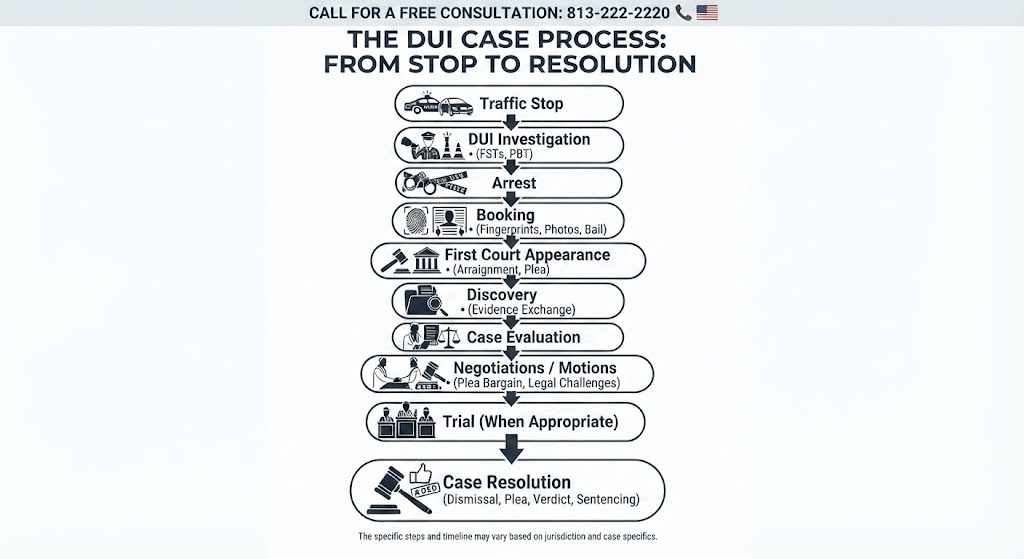
Felony DUI cases often involve constitutional issues, scientific evidence, procedural rules, and significant long-term consequences. As a former prosecutor and Florida Bar Board Certified Criminal Trial Lawyer, I draw upon decades of criminal trial experience to evaluate the evidence, explain your options honestly, and prepare a defense tailored to the facts of your case.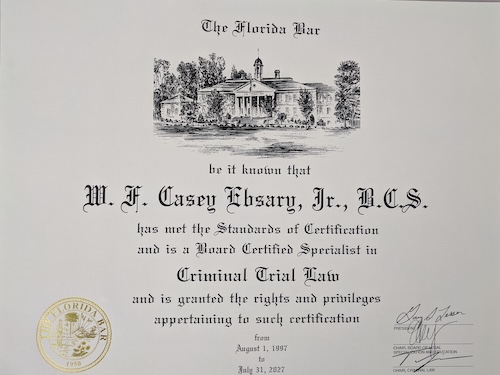
When someone contacts me about a felony DUI, they are often experiencing one of the most stressful moments of their life. They are worried about their family, their career, their driver’s license, and their future. My approach is to provide straightforward advice, thorough preparation, and experienced courtroom representation. I believe every client deserves an honest evaluation of the evidence—not unrealistic promises.
When you hire my office, I will:
I represent individuals facing felony DUI charges in courts throughout:
Whether you are a Florida resident or were arrested while visiting the Tampa Bay area, I can review your case and explain the legal process.