- Free Consultation: 813.222.2220 Tap Here To Call Us




Automatic License Plate Recognition in Florida


Understanding Automatic License Plate Recognition (ALPR) and Traffic Stops
Automatic License Plate Recognition systems and Automated law enforcement tools have transformed how police monitor public roadways. Among these, Automatic License Plate Recognition (ALPR)—sometimes referred to as License Plate Recognition Systems (LPRS)—plays a pivotal role in modern policing. For drivers navigating Florida roads, understanding how these video systems operate is essential.
If you are facing traffic or criminal charges resulting from an automated traffic stop, professional guidance can make all the difference. Learn more about tech-based defense strategies by visiting our bio page.
Florida Automatic License Plate Recognition Attorney
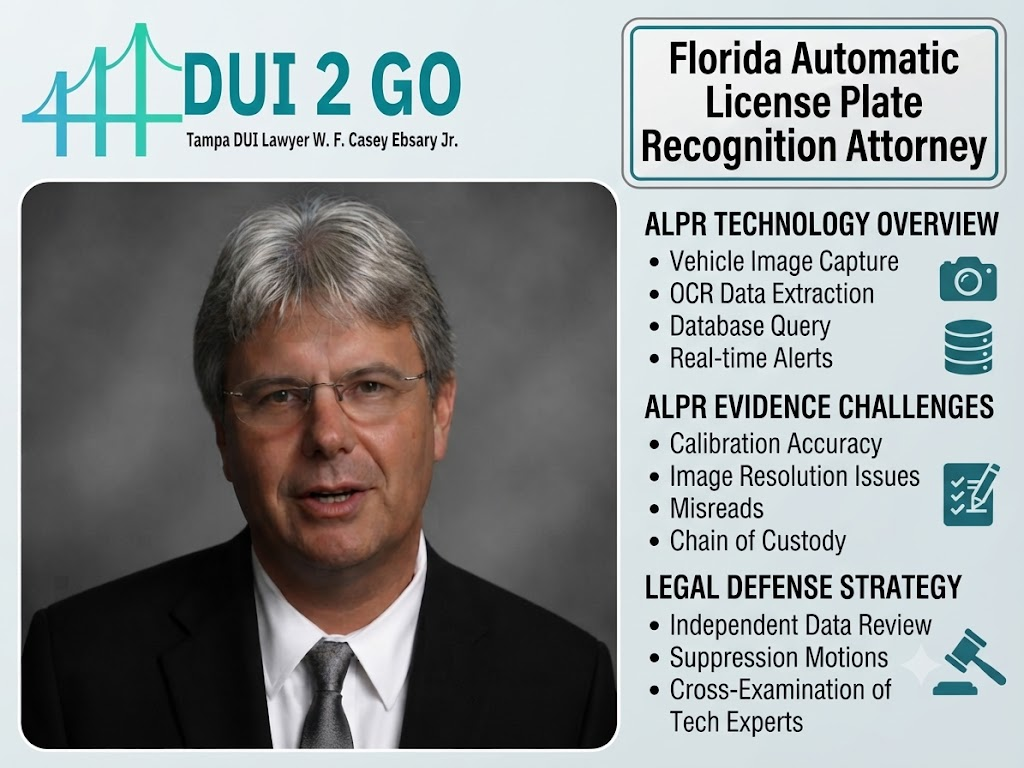
Were you stopped or arrested in Tampa following an automated camera alert? Technical glitches, optical character recognition errors, or database lag can compromise the validity of a stop. Discover how our legal team can help analyze your case details by exploring our background overview.
How License Plate Recognition Systems Function
ALPR technology relies on high-speed, computer-controlled camera systems equipped with optical character recognition (OCR) software. These cameras capture digital images of license plates—known as tag detections—and instantly compare them against automated databases to find matches or “tag alerts”.
To dive deeper into how these systems capture and process data, review the detailed insights at Automatic License Plate Readers ALPR Video. Furthermore, a comprehensive breakdown of technical terms and Florida guidelines can be found at License Plate Recognition Systems.
Core Components of LPRS Technology
| Component / Term | Description & Function |
| License Plate Recognition Reader (LPRR) | The technological eye attached to fixed structures or vehicles, capturing digital images and checking tag alerts. |
| Car Detector Mobile System (CDMS) | A mobile unit mounted on law enforcement vehicles designed to scan plates dynamically while on the move. |
| Hot Tag | A flag of interest triggered when a scanned plate matches records associated with warrants, stolen vehicles, or suspended drivers. |
| LEARN Database | The virtual repository (such as the Law Enforcement Archival and Reporting Network) that stores historical tag detections and alerts. |
Comparative Analysis: Traditional vs. Automated Stops
| Feature | Traditional Traffic Stops | ALPR-Triggered Stops |
| Initial Trigger | Direct visual observation of a violation (e.g., speeding, erratic driving). | Automated system match or computer “hit” via a database cross-reference. |
| Officer Role | Active observation and real-time discretion. | Responding to an automated system notification or prompt. |
| Evidentiary Scope | Officer testimony regarding physical driving patterns. | Digital logs, timestamps, location metadata, and system audit trails. |
Frequently Asked Questions (Q&A)
An ALPR is a high-speed, computer-controlled camera system that captures optical images of license plates and automatically compares them against databases.
Stationary cameras are fixed to structures like intersections, whereas mobile units (CDMS) are mounted directly onto law enforcement patrol cruisers to scan plates while moving.
A Hot Tag is an automated flag indicating that a scanned license plate matches a record of interest, such as a stolen vehicle or a suspended driver.
Data such as tag detections, dates, times, and locations are typically managed and stored in specialized virtual repositories like the LEARN database.
Stored ALPR data generally records plate numbers, timestamps, and locations without containing direct PII of the individual, which requires separate database inquiries.
Law enforcement utilizes automated matches as a basis to investigate further, though legal challenges often focus on database accuracy and system errors.
Potential issues include optical character recognition (OCR) misreads, camera angle distortion, and database update lags.
You can review visual and analytical resources directly at Automatic License Plate Readers ALPR Video.
Detailed explanations of Florida standards and terminology are available at License Plate Recognition Systems.
You can reach out directly to evaluate your specific case details through our contact page.
Call Tampa Bay Automatic License Plate Recognition Attorney
Navigating an arrest and the complexities of automated police surveillance and traffic stops requires specialized legal insight. Do not let technology dictate your future without a thorough defense. Get in touch with Tampa expert Casey Ebsary today through our contact page.