- Free Consultation: 813.222.2220 Tap Here To Call Us




Florida E-Bike Laws Explained – Video


YouTube Video
Title: Florida E-Bike Laws Explained by Tampa Attorney Casey Ebsary
Florida E-Bike Laws: Frequently Asked Questions
Electric bicycles have become increasingly popular throughout Tampa Bay and across Florida. I regularly receive questions from clients who want to know whether an e-bike is treated like a bicycle, whether they need a driver’s license, and what happens if they are stopped by law enforcement.
Florida has enacted specific laws governing electric bicycles. While many of the rules are straightforward, local governments may adopt additional restrictions regarding where e-bikes may be operated. Understanding both state law and local ordinances is important before you ride.
If you have questions about an arrest, criminal investigation, or traffic-related legal issue involving an electric bicycle, I invite you to learn more about me at https://dui2go.com/about/ or contact me directly at https://dui2go.com/contact/.
In most situations, yes. Florida law generally gives electric bicycles the same rights and duties as traditional bicycles. That means riders may generally use roads, bicycle lanes, shoulders, and other locations where bicycles are permitted unless another law or local ordinance provides otherwise.
However, that does not mean every location is automatically open to e-bike use. Cities, counties, and governmental agencies may adopt restrictions for sidewalks, beaches, parks, trails, and multi-use paths. Before riding in those areas, I recommend checking local rules rather than assuming state law controls every situation.
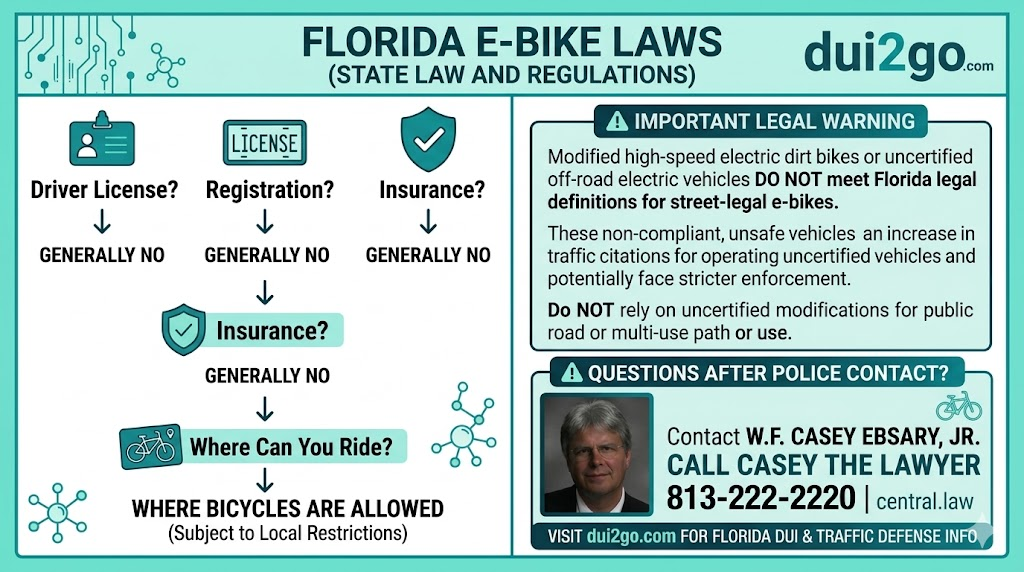
For an electric bicycle that meets Florida’s statutory definition, Florida law generally does not require a driver’s license, motor vehicle registration, title certificate, or proof of financial responsibility solely because you are operating the e-bike.
This is one of the reasons electric bicycles have become so popular. Individuals who choose not to drive—or who simply enjoy cycling—can often use an e-bike without many of the requirements associated with automobiles.
That said, local governments may adopt certain additional requirements authorized by state law, including minimum age requirements or identification requirements in some circumstances.
Florida E-Bike Requirements at a Glance
| Topic | Florida Law |
| Driver’s License | Generally not required |
| Registration | Generally not required |
| Title | Generally not required |
| Insurance | Generally not required solely because the vehicle is an e-bike |
| Local Restrictions | May apply |
⚠️ Important Reminder: These exemptions apply strictly to recognized Class 1, 2, and 3 e-bikes. High-speed electric dirt bikes or uncertified off-road electric vehicles do not qualify for these exemptions and are not street-legal on public roads or sidewalks.
In general, you may ride an electric bicycle where bicycles are permitted. State law specifically recognizes operation on streets, highways, shoulders, bicycle lanes, and bicycle or multi-use paths. The Legislature also allows local governments to regulate or prohibit e-bike use on sidewalks, beaches, trails, and similar public facilities within their jurisdiction.
Because these local rules vary, I encourage riders to verify local ordinances before assuming access is permitted everywhere.
Yes. Florida recognizes different classifications of electric bicycles. Manufacturers are required to permanently label qualifying e-bikes with information identifying the classification, motor wattage, and top assisted speed.
When purchasing a used e-bike, I recommend confirming that the required manufacturer label is still attached and that the bicycle has not been modified in a way that changes its legal classification.
E-Bike Classification Information
Manufacturer Label Must Include
E-bike Class
Top Assisted Speed
Motor Wattage
Florida law addresses modifications that change an electric bicycle’s motor-powered speed capability or motor engagement. If modifications are made that affect the classification, state law also addresses replacement of the required manufacturer label. Riders considering aftermarket modifications should carefully understand how those changes may affect compliance with Florida law.
This is one of the questions I receive most often. Whether Florida’s DUI statute applies in a particular situation depends upon the specific facts and applicable law. Because criminal liability depends on circumstances and legal interpretation, I do not believe it is responsible to give a blanket yes-or-no answer without evaluating the facts of a particular case.
If you have been investigated or arrested after operating an electric bicycle while impaired, I encourage you to contact me immediately so I can evaluate your individual circumstances.
Remain respectful and comply with lawful commands. Just because you are riding an electric bicycle does not eliminate constitutional protections. Every encounter is different, and the legal issues often depend upon why the officer initiated the stop and what occurred afterward.
If the encounter results in criminal charges, I recommend speaking with an experienced criminal defense attorney before making important legal decisions.
Many people assume e-bike cases are simple because they involve bicycles rather than automobiles. That assumption is not always correct. Traffic citations, criminal investigations, constitutional issues, and local ordinances can all affect the outcome of a case.
As a former prosecutor and Board Certified Criminal Trial Lawyer, I carefully evaluate the facts before advising clients about their legal options. If you need legal advice regarding an e-bike investigation or criminal case, visit my attorney profile at https://dui2go.com/about/ or contact my office at https://dui2go.com/contact/.
More Frequently Asked Questions
Florida law generally does not require proof of financial responsibility solely because someone is operating an electric bicycle that falls within the statutory definition.
Yes. State law authorizes local governments to regulate e-bike operation in certain locations.
Yes. Florida law requires qualifying electric bicycles to have permanent labels identifying the class, top assisted speed, and motor wattage.
Yes. If you are arrested or believe you are under criminal investigation, speaking with an attorney promptly can help you understand your rights and your legal options.
If a law enforcement officer signals you to stop while you are riding an electric bicycle, do not assume that using an e-bike changes your legal obligations. Whether a person can be charged with fleeing or attempting to elude law enforcement depends on the specific facts, the applicable Florida statutes, and how the courts interpret those laws.
I cannot say that every rider who fails to stop on an e-bike commits the offense, because that legal question depends on circumstances that may vary from case to case. If you are investigated, arrested, or charged after attempting to leave the scene on an e-bike, you should speak with an experienced criminal defense attorney immediately. Early legal advice can help protect your rights and determine whether the facts support the charges filed.
Official Resources
Florida Legislature (Electric Bicycle Regulations): https://www.flsenate.gov/Laws/Statutes/2025/316.20655
Florida Statute on Justia: https://law.justia.com/codes/florida/title-xxiii/chapter-316/section-316-20655/
Learn more about attorney W.F. Casey Ebsary Jr.: https://dui2go.com/about/
Contact Casey the Lawyer: https://dui2go.com/contact/