- Free Consultation: 813.222.2220 Tap Here To Call Us



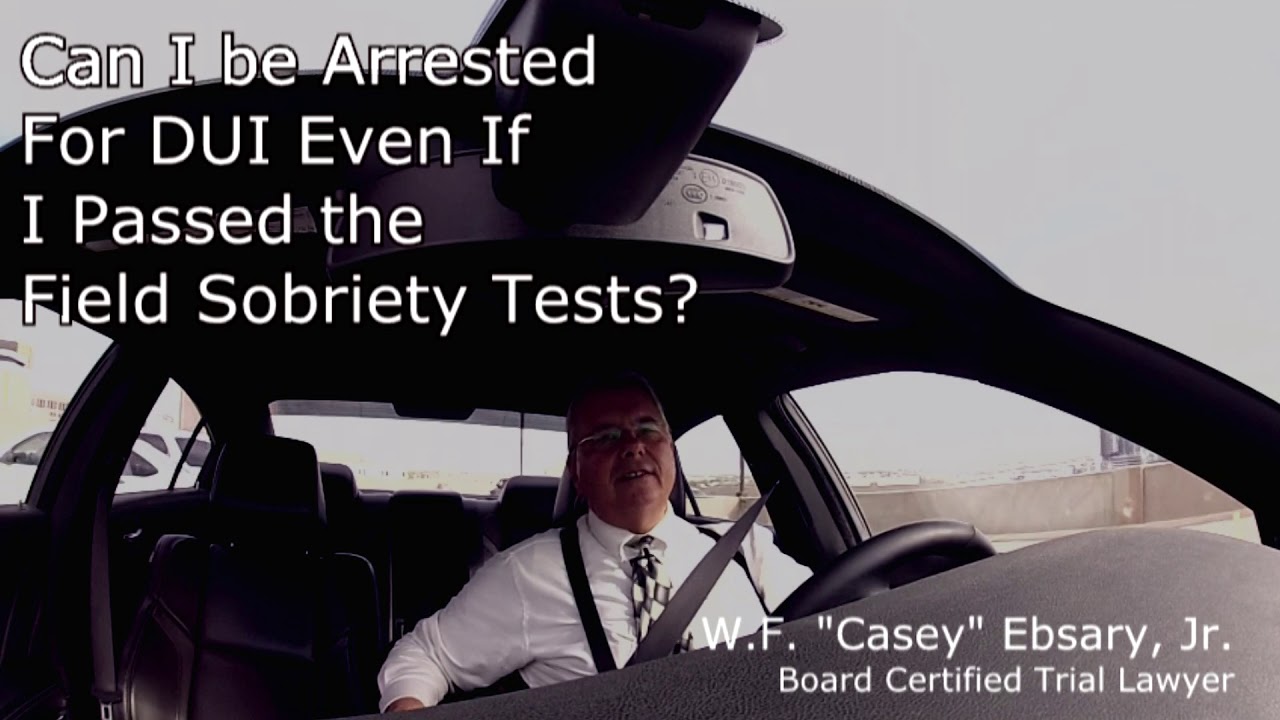
Video: Florida DUI Field Sobriety Exercises: Can You Refuse?


Florida Field Sobriety Testing: Frequently Asked Questions
No, you are not legally required to perform roadside field sobriety exercises, and you can politely decline them without an automatic license suspension. Many drivers confuse physical coordination exercises with chemical breathalyzer testing. While Florida’s Implied Consent Law enforces an immediate 1-year license suspension for refusing a post-arrest breath, blood, or urine test, that law does not apply to pre-arrest roadside exercises.
1. The Horizontal Gaze Nystagmus (HGN) Eye Test
The officer holds an object—such as a pen or a small flashlight—approximately 12 to 15 inches from your face and asks you to track it with your eyes while keeping your head completely still. They are checking for an involuntary jerking or twitching movement of the eyeball known as nystagmus.
The Flaw: Eyeball nystagmus is a complex neurological reaction that can be caused by dozens of natural, non-alcoholic variables. Inner ear imbalances, astigmatism, structural eye strain, influenza, and over-the-counter medications can cause prominent eyeball twitching, leading an officer to falsely declare that you failed the check.
2. The Walk-and-Turn (WAT) Divided-Attention Test
You are ordered to take nine steps in a straight line, placing your feet strictly heel-to-toe. Upon reaching the ninth step, you must execute a highly specific, multi-step turn and return nine steps back down the line while counting each step out loud.
The Flaw: This is a divided-attention test meant to force your brain to handle physical balance and mental counting simultaneously. NHTSA documentation openly concedes that even when administered under absolute laboratory conditions, the Walk-and-Turn test is only 79% accurate. Cobblestones, sloped asphalt, passing semi-truck traffic glare, heavy winds, and stiff footwear can make an entirely sober person lose their balance.
3. The One-Leg Stand (OLS) Balance Test
The officer instructs you to stand completely still, raise one foot approximately six inches off the ground, keep your arms locked flat against your sides, and count out loud by thousands (“one-thousand-one, one-thousand-two…”) until ordered to stop, usually for a full 30 seconds.
The Flaw: This test carries an even higher historical margin of error, with a baseline accuracy rate of only 83% under ideal conditions. Natural physical limitations such as a prior knee injury, lower back pain, inner ear fluid imbalances, carrying extra physical weight, or being over the age of 65 naturally interfere with a driver’s ability to maintain single-leg balance on the side of a highway.
DUI Field Sobriety Exercises: Roadside Flaws & Your Legal Rights
When flashing blue lights appear in your rearview mirror and a law enforcement officer asks you to step out of your vehicle, the sudden rush of anxiety can be completely overwhelming. If the officer suspects you have been driving under the influence, they will quickly transition the traffic stop into a criminal investigation by asking you to perform a sequence of physical and cognitive routines known as Standardized Field Sobriety Tests (SFSTs) or Field Sobriety Exercises (FSEs). The officer will typically present these tasks—like walking a straight line or balancing on one foot—as simple, objective alignment checks to verify that you are safe to drive.
In reality, these roadside physical routines are highly coordinated, deeply flawed, and heavily subjective grading systems. They are intentionally designed to help the officer compile a list of physical “clues” to justify your immediate handcuffs, establish probable cause for an arrest, and build the state’s criminal case against you.
The National Highway Traffic Safety Administration (NHTSA) has developed a standardized manual outlining three primary roadside tests that law enforcement units across Florida utilize. Despite being treated by prosecutors as definitive proof of impairment, NHTSA’s own historical research admits these exercises carry massive margins of error:
Table: DUI Field Sobriety Exercises Roadside Flaws
| Roadside Test | NHTSA Documented Accuracy Rate | Common Real-World Vulnerabilities |
| Horizontal Gaze Nystagmus | 88% Accuracy | Lighting glare, natural astigmatism, head trauma, inner ear issues. |
| Walk-and-Turn | 79% Accuracy | Passing traffic wind, uneven roadside slopes, high heels/boots, anxiety. |
| One-Leg Stand | 83% Accuracy | Prior knee/ankle surgeries, weight variables, age conditions, exhaustion. |
Under Florida’s Implied Consent Law, you face a mandatory 1-year driver’s license suspension if you refuse to submit to an approved chemical breathalyzer, blood test, or urine screen after a lawful arrest has already taken place. However, Implied Consent does not apply to roadside physical exercises. You retain the absolute constitutional right to politely decline an officer’s invitation to perform physical coordination tests.
If you choose to refuse, the officer cannot use your refusal to trigger an automatic administrative driver’s license suspension. While the prosecutor may try to argue to a jury that you refused because you knew you were impaired, declining to perform these subjective physical drills deprives the state of the video evidence and physical “clues” they need to lock in a conviction.
The Subjectivity Penalty: Officers do not give you credit for trying. If you successfully complete 95% of a walk-and-turn exercise but step off the imaginary line by a single inch on step seven because a truck drove by, the officer’s report will simply log a failing mark for loss of balance. You are being graded by an adversary who is actively looking for reasons to process your arrest.
Technical Legal Defense: Dismantling Roadside Evidence
If you have already been arrested after attempting to perform field exercises, an experienced defense approach shifts to systematically attacking the scientific validity of the state’s traffic stop observations. Under Florida’s modern evidentiary framework, the prosecution must show that these exercises conform to strict scientific criteria before using them to convict you:
Exposing Strict Protocol Deviations: The NHTSA training manual explicitly dictates how an officer must stand, what exact language they must use, and the surface conditions required for a valid test. If the dashboard camera or body-worn video shows the deputy gave confusing commands or hurried through the HGN eye check, the scientific foundation of the test is broken.
Filing Daubert Challenges via Florida Statute § 90.702: Because the state treats field exercises as specialized scientific markers of intoxication, your defense can push for a formal evidentiary hearing. If the arresting deputy cannot prove they reliably applied the testing principles to your unique physical situation, your attorney can move to bar the officer from offering opinion testimony regarding your performance.
Documenting Mitigating Environmental Realities: We meticulously audit the arrest scene. Factors like flashing emergency strobe lights reflecting in your eyes, uneven roadside grass, loose gravel, and extreme roadside nervousness are used to prove to a judge or jury that your physical performance was degraded by the environment, not by alcohol or controlled substances.
Video Transcript Summary
Florida criminal traffic analysis provides an educational breakdown regarding the technical limitations and structural subjectivity of roadside physical coordination tests. The defensive overview explains that while Standardized Field Sobriety Tests are framed by law enforcement as scientific metrics of impairment, their real-world accuracy rates are highly unstable and deeply impacted by roadside terrain, flashing emergency strobes, and individual medical histories. The summary reminds drivers that unlike breathalyzer testing, performing physical field exercises is entirely voluntary under Florida law, and a motorist retains the legal right to politely decline roadside coordination testing to prevent the creation of misleading state evidence.
Fight Your Roadside Traffic Charges in Tampa Bay
If you have been arrested for a DUI in Hillsborough, Pinellas, or Pasco County based on an officer’s claim that you “failed” your roadside field exercises, do not panic. These subjective roadside logs are highly vulnerable to aggressive legal challenges, especially when audited by an expert who understands police training manuals inside and out.
As a Board-Certified Criminal Trial Specialist and former prosecutor with over 30 years of localized courtroom experience, W.F. “Casey” Ebsary Jr. knows how law enforcement builds traffic cases—and where they cut corners. Our firm dissects dashboard footage, audits officer compliance with NHTSA manuals, and fights aggressively to protect your driving record and your liberty.
Constitutional Rights in DUI Traffic Stops
Understanding your constitutional rights during a traffic stop requires unpacking how this legal distinction impacts your defense:
Bypassing the Subjective Grading Trap: Field sobriety exercises are designed to collect evidence to justify an arrest. As explained in our deep-dive analysis of DUI field sobriety exercises, these physical routines are highly prone to error. An officer will log a minor slip due to passing traffic wind or uneven asphalt as a failure. Exercising your right to refuse denies the state the physical video evidence they rely on in court.
The Inherent Flaws of NHTSA Protocols: Even under laboratory conditions, standard exercises carry high error rates. For example, the Walk-and-Turn test is only 79% accurate, a metric we regularly challenge alongside our specialized videos and legal guides for traffic stops. Natural physical conditions, inner ear issues, or baseline test anxiety are routinely misinterpreted by officers as drug or alcohol impairment.
The Evidentiary Fight in Court: If you refuse the tests, the state may attempt to argue to a jury that your refusal shows a consciousness of guilt. However, an aggressive defense turns this narrative around by showing you declined to participate in an unscientific, rigged test to protect your rights, forcing prosecutors to meet strict evidentiary standards for bad driving allegations instead of relying on subjective roadside scores.
If you are dealing with a driving under the influence charge based on roadside performance metrics in Tampa or Clearwater, do not allow a flawed police report to dictate your future. Review our credentials about my trial practice
to see how a Board-Certified Trial Expert systematically deconstructs law enforcement procedures, and schedule a confidential consultation with our office to evaluate your traffic defense options today.

DUI Expert
Read our complete deep-dive article on DUI Field Sobriety Exercises and Defense Standards
Learn more About Our Solo Practice and Board-Certified Trial Record
Contact Our Tampa Office Immediately to schedule an urgent case evaluation and audit your roadside arrest video.
Call Casey at 813-222-2220 You can review our complete analysis of roadside rights, refusal strategies, and NHTSA error rates by watching our video.